
Web Accessibility (A11y): Why It Should Never Be an Afterthought
Verity Studio
Verity Studio • Original Content
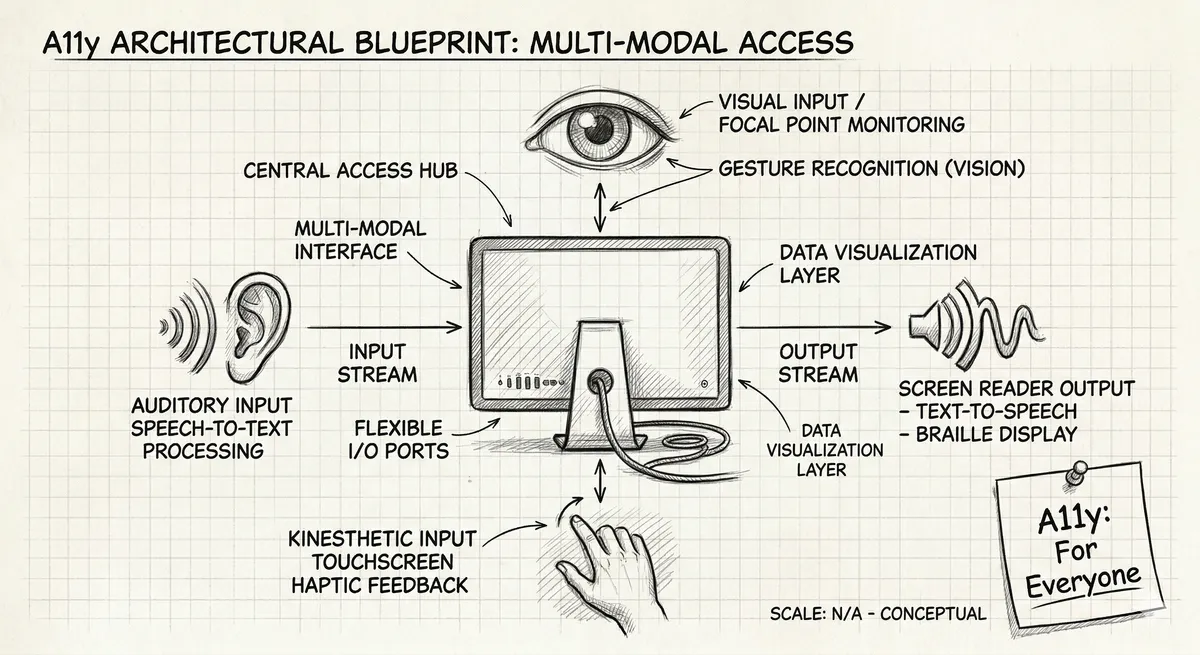
Imagine walking up to a pristine, beautifully engineered storefront, only to realize the front door is completely walled off.
For millions of users navigating the web every day, that’s exactly what it feels like to land on a website that isn’t built with accessibility (A11y) in mind.
In the rush to launch beautiful digital products, web accessibility is too often thrown to the bottom of the priority list—treated as a “nice-to-have” or a boring compliance checklist for later.
But here is the reality: Ignoring accessibility doesn’t just alienate your users; it actively harms your bottom line.
When you build an accessible digital experience, you aren’t just ticking a box. You are making a critical business decision. Here is why A11y must be a core architectural pillar from day one.
1. You Are Turning Away 15% of Your Market
Over one billion people globally experience some form of disability. That includes visual impairments, motor difficulties, cognitive challenges, and auditory limitations.
When you fail to use semantic HTML, ignore color contrast ratios, or build forms that can’t be navigated entirely by a keyboard, you are literally closing the door on potential customers. Ensuring your website works flawlessly with screen readers and assistive technologies means every single person has an equal opportunity to engage with your products, buy your services, and share your brand.
Can your business really afford to ignore 15% of the market?
2. Google Reads Your Site Like a Screen Reader
Here is a secret that many agencies won’t tell you: standard technical Search Engine Optimization (SEO) and web accessibility overlap almost entirely.
Search engines like Google browse the internet blindly. They can’t “see” your beautiful images or appreciate your clever color scheme. They rely strictly on your code structure. When you use semantic, accessible elements (like proper <h1> tags, <header> sections, <nav> menus, and descriptive alt attributes for images), you are handing Google a perfectly organized map of your business.
A site built for accessibility naturally ranks higher because search engines actually understand what it says.
3. Better Accessibility = Better Usability for Everyone
Have you ever tried to read a low-contrast website on your phone while standing in bright sunlight? Have you ever tried to click a tiny button while holding a coffee in one hand?
Those are situational impairments.
Accessible designs invariably result in cleaner, clearer, and far more intuitive interfaces. By improving color contrast, increasing touch targets, and simplifying complex navigation flows, you create an effortless experience for all users, regardless of their permanent or temporary limitations.
The Bottom Line
At Verity, we believe that treating A11y as a fundamental architectural pillar isn’t just a moral obligation. It results in faster, more searchable, and infinitely more usable digital products. It is good for humanity, and it is undeniably good for business.
Does your current website block potential customers at the door? Let’s fix that.
Questions?
"Every project is a sketch that grows. Reach out and let's turn your idea into reality."
Get in touch